Why this chapter exists
A cabling project without records may work on handover day but becomes expensive the first time the company moves staff, adds cameras or investigates a fault.
See the physical work before reading the details
Original Netcomtech training illustration. Product-specific termination geometry varies, so use the component manufacturer's instruction sheet on site.
18.1 Physical inspection
Walk every telecommunications room, major pathway and sample work areas. Check labels, cable support, bend radius, rack dressing, firestop, cabinet grounding/bonding and visible damage.
18.2 Test evidence
Verify every required cable ID has a corresponding test result and correct test limit. Resolve duplicate IDs, missing results and unexplained marginal passes before handover.
18.3 As-built drawings
Update drawings to show the installed route, not only the design route. Record patch panels, outlets, consolidation points, splice closures and backbone paths.
18.4 Photographic record
Take cabinet front/rear photos, representative pathway photos, firestop photos and other project-required evidence. Photographs should support the written record, not replace it.
18.5 Exceptions and limitations
Document anything deliberately outside the normal standard or project design, who approved it and what operational consequence exists.
18.6 Operations pack
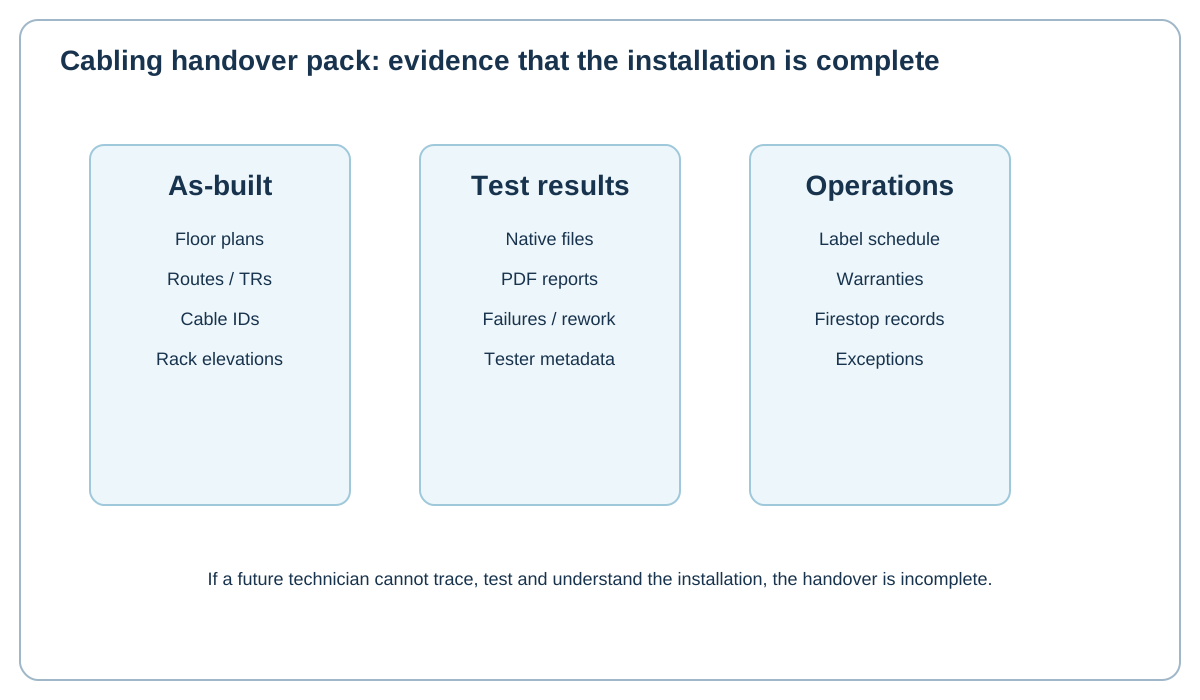
Provide cable schedule, test reports/native files, as-builts, rack elevations, label scheme, warranty information, manufacturer/system data and contact/ownership information.
Workshop exercise
Build a sample of this installation method on a training bench. Photograph the preparation before termination, the finished termination and the test result. Explain what would cause you to reject your own work.
Acceptance checklist
- The component matches the cable construction and category.
- The manufacturer's installation method was followed.
- No conductor, jacket, screen or fibre damage is visible.
- Pair twist, bend radius and strain relief are preserved.
- The correct test model and limit were used.
- The cable ID matches the drawing and test report.
Technical references
Manufacturer instructions and the project standard always override generic training examples.